Professional marten control
Martens in your garden, roof or car? These cunning animals can be more than just a nuisance – they can cause serious damage.
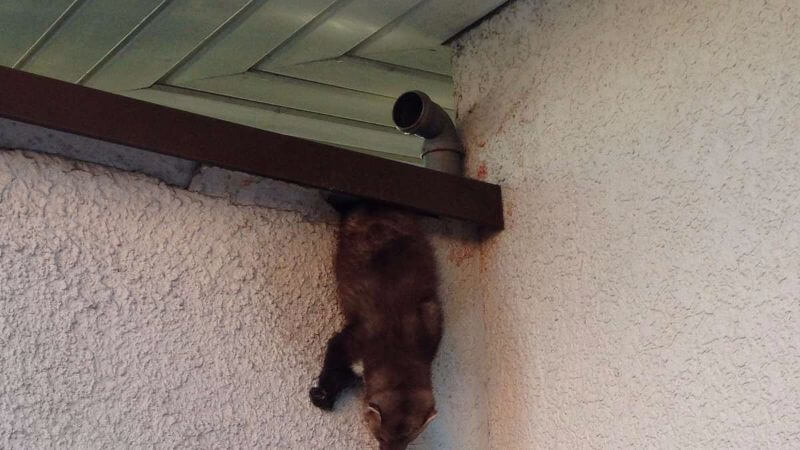
Various species of marten are native to Switzerland, including the stone marten (Martes foina)the pine marten (Martes martes) and the ermine (Mustela erminea). Although these agile predators are not dangerous, they cause considerable damage through their nocturnal activities and by entering buildings and vehicles.
Whether you prefer animal-friendly repelling methods, try home remedies or consider professional help – we offer you all the answers. Find out how you can effectively combat martens without violating Swiss law.

Characteristics of a marten
Martens, especially the stone marten, also known as the domestic marten, which is frequently found in Central Europe, are characterized by certain physical features. These nocturnal animals are about the size of a cat, have a long, slender build and short limbs. They are characterized by a bushy tail, which helps them to balance, and a white patch on the throat, which can extend to the front legs.
Their fur is usually dark brown to gray-brown, and their face looks particularly striking due to their pointed snout. They are extremely adaptable animals and use their climbing skills to take up residence in inhabited areas, mainly in attics. They can easily slip through openings as small as 7 to 8 centimeters in diameter. In addition, they are able to jump up to 2 meters and even push up heavy roof tiles to gain access to buildings.
Are martens dangerous?
They can pose a serious threat to homeowners – not so much through direct attacks, but through the significant damage they cause and the hygiene risks associated with their presence.
Hygiene problems and germs
Martens leave droppings and urine everywhere in their hiding places, which can lead to strong odors and an unhygienic environment. These droppings in turn attract other pests such as flies. Decaying food scraps that they carry into their nests add to the problem and also spread an unpleasant odor of decay. Although martens rarely transmit dangerous diseases directly to humans, the germs and bacteria they leave behind in their environment can certainly pose health risks, especially for children and pets.
Material damage
Perhaps the greatest danger posed by martens is the structural damage they cause to houses. Especially in attics, they cause considerable damage. They nibble on insulation materials, which can massively affect the thermal insulation of a house, causing long-term damp problems. It becomes even more dangerous when they gnaw through electrical cables, which can lead to short circuits and possibly fires. Their activities not only reduce the value of a home, but also pose a significant safety risk.
Even if martens do not pose a direct threat to human health, they can cause considerable damage by contaminating and damaging property.
Signs of a marten infestation
They are nocturnal animals that are mainly active at dusk. During the day, they retreat to their hiding places, which are often located in areas that are difficult to access. These hiding places can be in roof trusses, barns, garages or other enclosed and quiet spaces. However, although they are rarely seen during the day, there are clear signs that indicate a marten infestation.

Noises at night
Martens often make themselves known through loud noises. Especially in the late evening and at night, you can hear scratching, scratching or occasionally even squeaking. These noises come from their movements in the walls, in the attic or under the floor, where they actively forage for food or build nests.
Gnaw marks
Martens have a strong biting instinct, as their teeth are constantly growing and need to be worn down. For this reason, they leave gnaw marks on many different materials, such as wood, insulation or even electrical cables. This damage can not only be costly, but can also lead to dangerous situations such as power cuts or fires.
Feces and traces of urine
Another clear sign of a marten infestation is their droppings. Marten droppings are relatively easy to recognize: It is about 2 to 4 centimeters long, dark in color and often has twisted ends. In combination with a pungent ammonia odor caused by their urine, this is a clear signal of their presence.
Contamination and food residues
They leave behind not only droppings and urine, but also food scraps and the remains of trapped animals. If you find spoiled food, bird feathers or fur remains in the attic or other inaccessible places, this also indicates a marten. These food remains can also give off an unpleasant odor.
Damage to the insulation
Martens like to retreat to insulated and warm areas, which is why they often damage the insulation materials in houses. They tear out parts of the insulation to build nests or to create more space for themselves. This can significantly affect the energy efficiency of a house and lead to expensive repairs.
By combining these signs, you can recognize relatively quickly whether you are dealing with a marten infestation.
Martens and nature conservation – what you need to know
In Switzerland, marten control is regulated by law, and there are certain periodsin which measures to drive away or control the animals are permitted. As martens are not protected species, but are subject to hunting law, there are clear guidelines for their hunting and deterrence.
Hunting rights and closed season
The hunting of martens is strictly regulated in Switzerland. They may only be caught or killed by hunters with a valid hunting license. The legally stipulated closed season, which runs from March 1 to October 15, must be observed. During this period, it is forbidden to catch or kill martens, as they are rearing their young during this time.
Legal requirements and penalties
Hunting law provides for high penalties for violations. Anyone who catches or kills martens without a hunting license risks fines of up to several thousand francs. Hunting is only permitted with a special permit, particularly in pacified areas such as residential areas or gardens. Permission is also required to set traps.
Marten protection and legal regulations are intended to ensure that the animals do not suffer unnecessarily and that the population remains stable.
5 tips for marten defense
Martens are shy animals that nest in attics, garages or even cars. Here are 5 proven methods to prevent martens and their damage.
Tip 1: Use noise protection
They are very sensitive to noise and avoid places where it is loud. A simple radio placed in the attic or garage during the day can deter the animals. There are also special ultrasonic devices that emit continuously changing frequencies and drive martens away. This method can be successful in the short term, but martens get used to the sounds over time if there is no real danger.
Tip 2: Use odorants
Another common tip is to use odors to scare them off. Dog hair, cat urine or human hair are recommended as possible repellents, as martens avoid larger predators. However, here too it has been shown that the animals become accustomed to these odors over time. The use of urine as a deterrent can also be very unpleasant for humans, as the smell can penetrate the interior of the car.
Tip 3: Marten screens and wire mesh
Marten grids or wire mesh under the car are designed to prevent martens from getting into the engine compartment. The theory behind this is that the animals avoid the unpleasant feeling of walking on the grille. In reality, however, martens often bypass these barriers or get used to them.
Tip 4: Secure access
Martens can get into the house or attic through tiny openings. Another method of keeping martens out is to seal up loopholes. Make sure that openings of around 5 centimeters in diameter are sufficient for the animals. Rain gutters and roof tiles should also be checked, as martens like to use these as entry points.
Tip 5: Use lighting as a deterrent
As they are nocturnal, it is often advised to park the car under a street lamp to keep the animals away. Unfortunately, practice shows that this is not particularly effective, as the engine compartment remains dark anyway. The light can even drive the animals under the car, where they seek shelter.
Many people rely on household remedies to keep martens out of their cars or homes. At first glance, these solutions seem simple and cheap, but how effective are they really? Methods such as dog hair, cat urine or parking under a street lamp are often recommended, but their effect is usually short-lived.
Conclusion – When it’s time to call an expert
Our many years of experience in marten control have shown us that every building and every situation is unique. We therefore rely on state-of-the-art technologies to offer effective and animal-friendly solutions.
Thanks to our extensive knowledge of Swiss legislation and the specific environmental conditions in the region, we adapt our methods to the needs of our customers. Especially in rural areas and urban attics, our customized solutions have already solved numerous marten problems in the long term. Customers in Zurich, Lucerne and throughout Switzerland rely on our professional marten control services to make their buildings safe and marten-proof.
Our aim is to offer you not only a quick but also a permanent solution – whether for your own home or your company. Home remedies often only offer short-term protection. S&F Insect Control uses innovative techniques to keep martens away in the long term
-
Altendorf
Head office
-
Aarau
Branch office
-
Affoltern am Albis
Branch office
-
Bathing
Branch office
-
Basel
Branch office
-
Einsiedeln
Branch office
-
Lucerne
Branch office
-
Miles
Branch office
-
Rapperswil
Branch office
-
Schwyz
Branch office
-
Uster
Branch office
-
Waedenswil
Branch office
-
Wangen near Olten
Branch office
-
Winterthur
Branch office
-
train
Branch office
-
Zurich
Branch office